Job
enquiry:+91-9121642626
Job
enquiry:+91-9121642626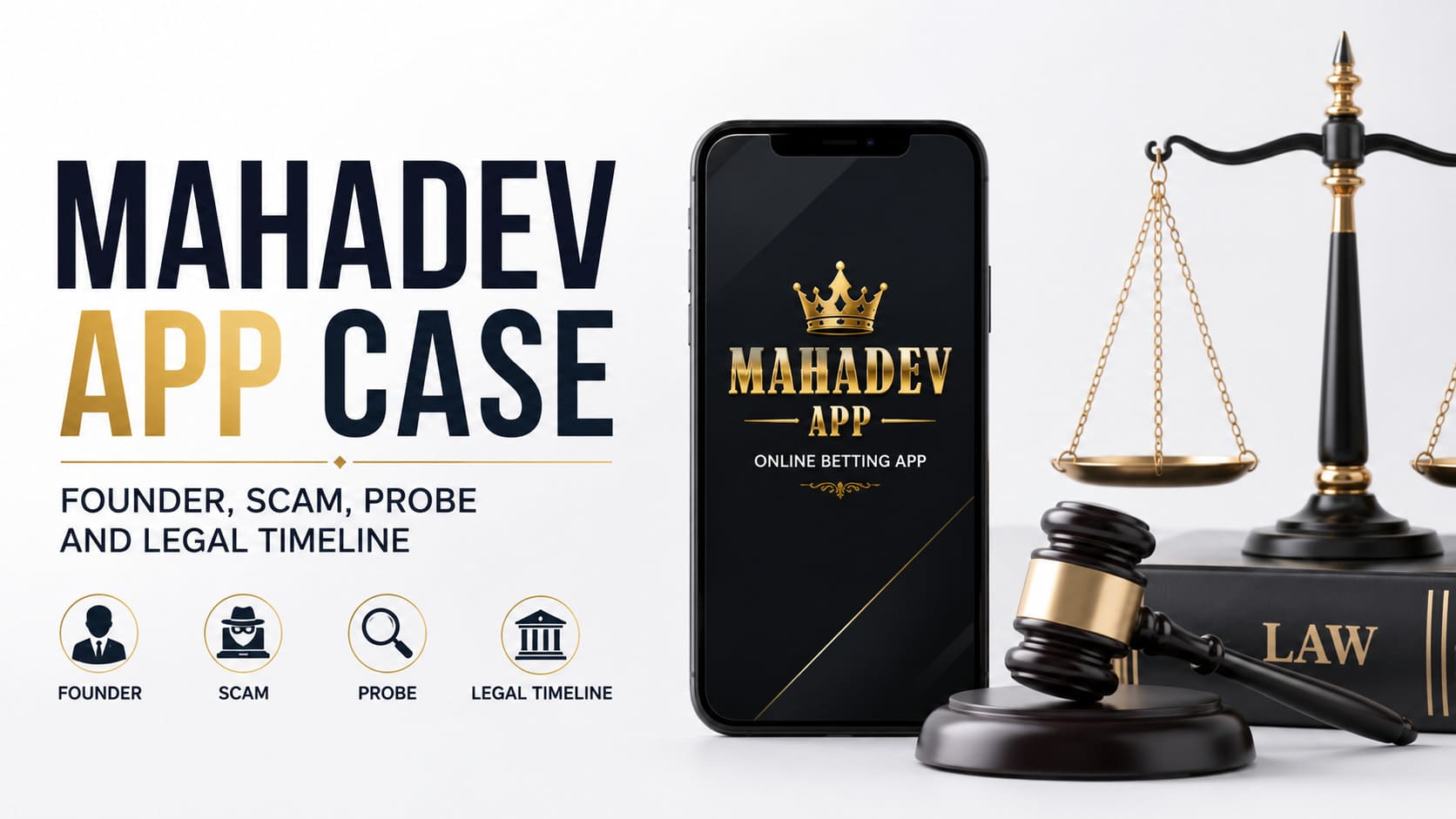
Mahadev App Case: How the Alleged Betting Network Came Under Investigation
Ask anyone in Chhattisgarh's Bhilai or Durg belt about the Mahadev app and you'll get a different reaction than you'd expect from a "financial crime" story. Some shrug. Some get quiet. A few still argue it wasn't as bad as the papers made it sound. That split reaction is basically the whole case in miniature, a betting platform that grew from a small-town operation into what investigators now call one of India's largest alleged money laundering networks, tied to politicians, actors, and a cash economy running in the thousands of crores.
This piece walks through what the Mahadev app actually was, who allegedly ran it, how the Enforcement Directorate's (ED) case built up over time, and where things stand now. Everything tied to guilt or wrongdoing here reflects allegations made by investigating agencies that the accused persons are entitled to a fair trial, and courts haven't delivered a final verdict on most of these charges.
What Is the Mahadev App?
The Mahadev Online Book also referred to as Mahadev Book, MOB, or simply the Mahadev betting app was an online platform that allegedly ran illegal betting and gambling operations across sports, card games, and casino-style formats. Users could reportedly place bets on cricket, football, badminton, tennis, poker, teen patti, and even things like election results.
It wasn't listed on the Google Play Store or Apple's App Store. Access typically came through agent networks, WhatsApp groups, and word-of-mouth referrals, which made it harder to trace and easier to scale quietly. According to the Enforcement Directorate, the app was created in 2018, though some accounts place its actual launch closer to 2017.
Who Founded the Mahadev App?
The two names that keep surfacing are Saurabh Chandrakar and Ravi Uppal. Per ED findings, both hail from Chhattisgarh, with Chandrakar operating the app from Dubai alongside Uppal. What makes Chandrakar's story land differently in the press is the contrast before relocating to Dubai in 2019, he reportedly ran a small juice shop called "Juice Factory" with his brother in Bhilai. From juice stall to alleged crore-scale betting syndicate is the kind of arc that made this story travel far beyond financial crime beats.
Other names that show up across ED filings include Tanveer Bhatt, Pintu Mehta, and Ayush Mishra, described as accomplices helping run the wider network.
How Did the Mahadev App Operate?
Investigators describe the structure as a franchise model. According to the ED, the operators allegedly franchised "panel" or "branch" access to associates on a 70-30 profit split, letting local operators onboard users, generate betting IDs, and collect money, while the core team handled the technology and the money movement.
Money reportedly moved through layers of benami (proxy) bank accounts, UPI transfers, and hawala channels. The pattern investigators allege: funds collected from bettors in India were pushed out through hawala and trade-based laundering routes, occasionally touching crypto assets, then brought back and invested through foreign portfolio investment channels into Indian markets effectively cleaning the money on the way back in.
The scale, if the ED's numbers hold up, is hard to overstate. At its reported peak, the operation was allegedly generating around ?200 crore a day, with total proceeds of crime estimated by the ED at roughly ?6,000 crore and some later reports pushing that figure toward ?40,000 crore across the network's lifetime.
How the Mahadev App Gained Massive Popularity
Timing mattered here more than marketing. The platform reportedly had a slow start, then picked up sharply during the COVID-19 lockdowns, when stadiums were empty, people were stuck at home, and sports betting moved almost entirely online. Referral networks did the rest agents earning commissions for every new user meant growth was self-funding.
There's also the uncomfortable part nobody likes writing about: a chunk of users came from low-income backgrounds, chasing quick money they didn't have another way to make. That's not unique to Mahadev, but it's part of why the case became a bigger public conversation than a typical financial crime story.
Why Did Authorities Start Investigating the Mahadev App?
The first cracks appeared through state-level FIRs filed by Chhattisgarh police and the state's Economic Offences Wing, flagging illegal betting activity tied to the app. Once the money trail started pointing toward large-scale, cross-border movement, the case escalated first to the ED under the Prevention of Money Laundering Act (PMLA), and later the CBI got involved too, taking over multiple FIRs to probe what investigators describe as a larger conspiracy.
ED Investigation and Money Laundering Allegations
The ED's core allegation is that the Mahadev Online Book functioned as an "umbrella syndicate" , a backend system enabling multiple illegal betting websites and apps to onboard users, issue IDs, and launder proceeds through a dense web of proxy accounts. The agency has said the platforms were structured so that users would ultimately lose money, with winnings paid selectively enough to keep the funnel running.
The political dimension is where this case stopped being a routine betting probe. The ED alleged that then-Chhattisgarh Chief Minister Bhupesh Baghel received ?508 crore in kickbacks from the app's promoters, a claim originating from a "cash courier" named Asim Das who said he was linked to the promoters. Baghel denied the allegation outright, calling it a politically motivated attempt to damage his image ahead of state elections and it's worth noting this remains a contested allegation, not an established finding.
Key Events in the Mahadev App Case Timeline
- 2017–2018: The app is reportedly created; early growth is slow.
- 2020–2021: Usage surges during pandemic lockdowns.
- 2022–2023: Chhattisgarh police and EOW register FIRs; ED opens a money laundering probe under PMLA.
- 2023: Political controversy erupts over alleged kickbacks to Bhupesh Baghel ahead of assembly elections; Chandrakar reportedly holds an extravagant wedding in Ras Al Khaimah, UAE, said to have cost around ?200 crore, complete with private jets and celebrity performances.
- October 2023: ED files its first chargesheet, naming 14 accused including Chandrakar and Uppal.
- 2024: A fresh chargesheet names 25 individuals and entities; Interpol issues a red corner notice; Uppal is reportedly apprehended by Dubai police. Actor Sahil Khan is detained by Mumbai police crime branch after his anticipatory bail plea is rejected.
- 2025: CBI conducts fresh raids, including at Baghel's residences, widening the political scrutiny.
- Early 2026: The ED has filed five charge sheets in total, arrested 13 people, and attached assets worth roughly ?2,621 crore, including Dubai property linked to Uppal.
- March 2026: ED attaches assets worth ?1,700 crore in a single action, including villas in Burj Khalifa.
Dates and figures continue shifting as the probe expands treat the numbers above as reported at time of writing, not a closed ledger.
Legal Cases and Charges Filed
The core charges run under the Prevention of Money Laundering Act, alongside gambling-related offences under state laws (most Indian states treat betting on games of chance as illegal, separate from skill-based platforms like fantasy sports). The ED's chargesheets name promoters, panel operators, hawala operators, and associates accused of holding or moving proceeds of crime. Courts have taken cognizance of multiple prosecution complaints, and provisional attachment orders under PMLA have been repeatedly renewed and expanded as new assets surface.
Role of the Founders in the Investigation
Chandrakar and Uppal remain the central figures. Both are reported to have left India for the UAE before the scale of the operation became public, which has complicated extradition efforts. Chandrakar was reportedly placed under house detention in Dubai at one point, with Indian agencies pursuing his return through diplomatic channels though as of the most recent reporting, both founders remain outside direct Indian custody, with Uppal reportedly having moved locations more than once. Their legal teams have not been shown, in available reporting, to have entered a substantive public defense against the specific ED allegations.
Impact of the Mahadev App Case
Beyond the headline numbers, the case has had a few concrete ripple effects. Bank accounts of ordinary people got roped in as "mule" accounts, sometimes without the account holders fully realizing what they'd agreed to. Several Bollywood personalities were questioned over alleged promotional links to the platform, which pulled celebrity endorsement practices into the conversation about accountability. And politically, the case became a live issue in Chhattisgarh's electoral cycle, with allegations and denials trading back and forth well past the initial news cycle.
Government Action Against Illegal Betting Apps
The broader regulatory backdrop matters here. Indian courts have drawn a consistent line between skill-based platforms and pure chance-based betting fantasy sports formats like Dream11 have been held up in some High Court rulings as legal games of skill, while betting apps built around chance-based outcomes remain prohibited in most states. Off the back of cases like Mahadev, there's been renewed pressure on the Ministry of Electronics and IT and state governments to tighten blocking mechanisms for offshore betting platforms, and on banks to flag suspicious mule-account activity earlier rather than after the money has already moved.
Key Lessons from the Mahadev App Case
A few things stand out. First, offshore hosting doesn't put a platform beyond reach, it just slows the process down. Second, the "70-30 franchise" structure shows how these networks scale by turning ordinary people into local operators, which spreads both the profit and the legal exposure much wider than a single mastermind. Third, and this is the one that gets underplayed: a huge share of the users weren't criminals, just people looking for an edge in a tough economy, and enforcement action rarely does much for them directly, since attached assets go through a legal process rather than back to individual bettors.
Latest Updates in the Mahadev App Case
As of the most recent reporting, the ED's cumulative asset attachment across the case sits above ?2,600 crore, with additional large attachments including Dubai real estate ,added through early-to-mid 2026. The agency continues filing fresh chargesheets as new accused and entities are identified, and CBI's parallel probe into the political dimension, including scrutiny of Bhupesh Baghel, is still active. Extradition proceedings for the two primary promoters remain unresolved. Given how frequently new developments surface in this case, readers following it closely should check current wire reports (PTI, ANI) for the latest chargesheet filings and court dates.
Conclusion
The Mahadev app case isn't really one story, it's three running in parallel: a financial crime investigation, a political controversy, and a much quieter conversation about why illegal betting apps keep finding new users despite years of crackdowns. The ED's numbers keep climbing, the extradition question keeps stalling, and the political allegations keep getting denied. Whatever the courts eventually decide, the case has already reshaped how seriously agencies treat offshore-hosted betting platforms which, given how many of these apps still circulate on WhatsApp and Telegram, was probably overdue.
Frequently Asked Questions
What is the Mahadev App case?
It's an ongoing Indian investigation into an alleged illegal online betting network, the Mahadev Online Book, accused of running gambling platforms and laundering proceeds through a wide network of proxy accounts and hawala channels.
Who founded the Mahadev App?
Saurabh Chandrakar and Ravi Uppal are named by the ED as the primary promoters, both originally from Chhattisgarh and operating from the UAE at the time the app scaled up.
Why is the Mahadev App under investigation?
State police FIRs alleging illegal betting activity led to an ED probe under the Prevention of Money Laundering Act, once investigators found evidence of large-scale, cross-border fund movement.
What are the allegations against the Mahadev App?
The ED alleges the platform ran illegal betting across sports and card games, laundered proceeds through benami accounts and hawala networks, and paid kickbacks to political figures allegations that remain contested and unproven in court as of now.
What role does the Enforcement Directorate play in the case?
The ED is the lead agency prosecuting the money laundering angle under PMLA — filing chargesheets, attaching assets, and pursuing Interpol notices and extradition requests against the accused.
Is the Mahadev App legal in India?
No. Betting on games of chance is illegal in nearly all Indian states, and the specific games hosted on the Mahadev platform fall outside the narrow legal carve-out that courts have granted to skill-based formats like fantasy sports.






 Whatsapp
 Email
Email