Does a Custom Mobile App Improve Your Business? The Real Numbers
Mobile apps now account for roughly 90 percent of the time people spend on their phones, and the global mobile app market is projected to generate over $935 billion. Those numbers explain why so many businesses consider building one. What they don't explain is whether a custom app is the right move for your specific business, or what "custom" should even mean in practice. That's the gap most advice on this topic skips.
Quick answer: yes, a well-built custom app genuinely improves business outcomes, roughly 3x higher engagement than mobile-web-only alternatives and about 30 percent higher customer lifetime value, with ROI typically arriving in 12 to 18 months. But the honest catch is retention: only 25-30 percent of users return the day after install regardless of build quality, so the return depends entirely on deliberate post-launch engagement, not the build alone. The rest of this guide covers the real numbers, the real costs, and when a custom app genuinely isn't the right call.
Here's an honest, current look at the real ROI, the real retention numbers most businesses never see until it's too late, and when a custom build genuinely makes sense versus when it doesn't.
What "customized" means
This deserves a real definition, since the term gets used loosely. A customized mobile app isn't just an app with your logo on it. It's built around your specific business workflow, your actual customer data and integrations, and features that solve a problem your particular business has, rather than a generic template stretched to fit.
That distinction matters practically. A template-based app builder can get something live fast and cheap, and for a simple, low-stakes use case, that's often the right call. A genuinely custom build makes sense in a different situation. Your business has a specific process, a booking flow, an inventory system, a loyalty structure, that off-the-shelf tools handle poorly or not at all. In that case, the cost of forcing your business to fit someone else's template is higher than the cost of building something that actually fits you.
The real ROI case, with real numbers
Custom apps report roughly three times higher engagement and longer sessions than mobile-web-only alternatives, with lifetime customer value up around 30 percent. Operational ROI typically arrives within 12 to 18 months rather than immediately. Our guide on getting real financial success from mobile app development covers this planning process in more depth. Properly developed custom apps aligned to real business goals have shown returns as high as 420 percent from operational efficiency gains alone, cutting manual work, reducing errors, and speeding up processes that used to run through spreadsheets or phone calls.
Retention is where the strongest case actually lives. App users show a 58 percent 90-day retention rate on average, and that climbs to 79 percent specifically when a business uses targeted engagement features. Personalized push notifications and relevant in-app messages during the critical first 90 days after download make that difference. That 21-point gap between average and well-executed retention is almost entirely a function of how thoughtfully the app was built and maintained, not luck.
Nike's app is a well-documented example of this at scale. It now accounts for a significant share of the brand's US transactions, built specifically around the kind of personalized, loyalty-driven experience a generic e-commerce template couldn't replicate.
The retention reality most pitches skip
Any honest conversation about custom app ROI has to include this. Only about 25 to 30 percent of users return the day after installing a new app. By month three, retention typically falls to around 29 percent, meaning roughly 71 percent of users have churned. This isn't a reason to avoid building an app. It's a reason to plan for retention deliberately from the start.
Onboarding that gets users to real value fast matters here. So does building notifications around genuine relevance rather than generic promotional blasts, exactly the pattern covered in more depth in our guide on why people actually uninstall apps. A custom app that ignores this reality performs no better than a template one. The build quality only pays off if retention is engineered in deliberately, not assumed to follow automatically from good code.
Where the budget goes
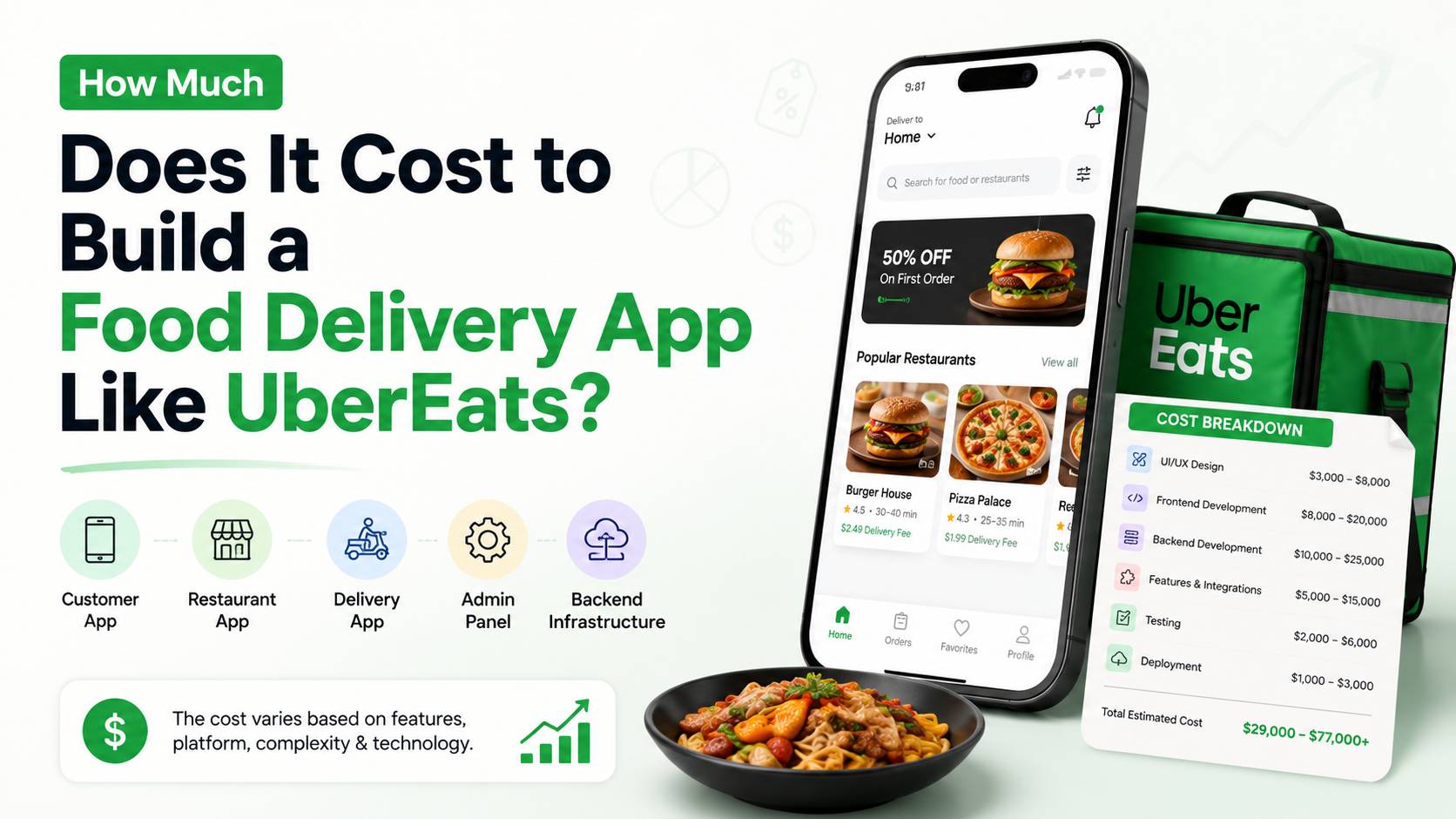
Worth knowing before scoping a project: development and QA typically consume around 63 percent of a mobile app's total budget, the largest single share. UI/UX design accounts for roughly 17 percent. That split is a useful sanity check against any quote that seems unusually cheap in one area. An app with almost no design budget, or almost no QA budget, is cutting corners somewhere that will show up later, either as a clunky experience or a buggy one.
Security, with real nuance
It's tempting to claim custom apps are automatically more secure than template ones, and that claim doesn't hold up to scrutiny. Security depends on implementation quality and ongoing maintenance discipline, not simply whether the code is custom or off-the-shelf. A poorly maintained custom app, with unpatched dependencies and no real security review process, can be considerably less secure than a well-maintained, regularly updated platform product from a vendor with a dedicated security team.
What custom development genuinely offers is control. You decide exactly what data is collected, how it's stored, who has access, and how quickly a vulnerability gets patched once discovered, rather than depending entirely on a third-party vendor's roadmap and priorities. That control is valuable specifically when your business handles sensitive data or has compliance requirements a generic platform wasn't built around. It's not a substitute for actually investing in security practices once the app exists.
The decision that comes before custom or not
This is the part most advice on customized apps skips entirely, and it's become the real first question. A custom app doesn't automatically mean a fully native build anymore. For a large share of business use cases, e-commerce, booking systems, dashboards, a Progressive Web App now delivers close to native-level engagement at a meaningfully lower cost. It can still be fully custom to your specific business rather than a generic template.
Native remains the right call specifically when you need deep hardware access, app store presence, or the highest possible performance ceiling. Getting this architecture decision right matters as much as the decision to go custom in the first place, since it directly shapes both your budget and your timeline.
When a custom app isn't the right call
Worth saying plainly, since most advice on this topic never does: not every business needs one. If your core need is informational, sharing hours, services, and contact details, a strong mobile website handles that fully, at a fraction of the cost.
If your workflow genuinely matches what an established platform already does well, a booking tool, a basic e-commerce storefront, forcing a custom build for the sake of having "your own app" often costs more than it returns. Before committing, it's worth genuinely validating that the underlying idea and workflow justify a dedicated app, rather than assuming custom is automatically the better choice.
Getting the business case right before you build
A few practical steps worth taking before committing budget. Write down the specific workflow or process the app needs to improve, in concrete terms. Not "increase engagement," but the actual task a user or employee currently does badly. That's the same discipline covered in our guide on writing a real business plan for mobile app development. Estimate the realistic time or cost savings from fixing that specific process, since that's the number a 420 percent efficiency ROI actually gets measured against, not a vague sense that an app will help.
Map out who owns retention after launch, since the honest churn numbers above mean an app without a dedicated post-launch owner tends to quietly decay regardless of how well it was built. And get a real cost estimate covering the full picture, development, design, QA, and the first year of maintenance, not just the initial build quote, since that's the number that actually determines whether the ROI case holds up in practice.
The bottom line
A custom mobile app can genuinely improve a business. Real data backs that up clearly. But the return depends entirely on whether it's built around an actual business need, architected with the right technical approach for that need, and given real, deliberate attention to retention after launch. A custom app built without that discipline underperforms a well-executed template just as easily as a template underperforms a thoughtful custom build.
If you're weighing whether a custom app is the right move for your business, that's exactly the conversation worth having with an experienced mobile app development company before committing budget. It's worth engaging developers who'll tell you honestly when a simpler option actually serves your business better, rather than defaulting to the most expensive answer.
Frequently Asked Questions
Does a custom mobile app deliver a better return than a template-based app? Data suggests yes, when built around a real business need. Custom apps report roughly three times higher engagement than mobile-web-only alternatives, with lifetime customer value up around 30 percent and operational ROI typically arriving within 12 to 18 months. But the return depends heavily on execution, a poorly built custom app can underperform a well-executed template.
What does "customized" mean for a mobile app? A genuinely customized app is built around your specific business workflow, actual data and integrations, and features solving a problem your particular business has. It's not a generic template with your branding applied. It's a meaningful distinction worth confirming directly with any development partner, since the term gets used loosely.
Are custom apps automatically more secure than template-based apps? No, and this is a common oversimplification. Security depends on implementation quality and ongoing maintenance, not simply whether the code is custom or off-the-shelf. A poorly maintained custom app can be less secure than a well-maintained platform product. What custom development genuinely offers is more control over data handling and patching speed, not automatic security.
What percentage of app users actually stick around after installing? The honest numbers: only about 25 to 30 percent of users return the day after installation, and retention typically falls to around 29 percent by month three. This applies to custom and template apps alike. Retention has to be engineered deliberately, through fast time-to-value onboarding and genuinely relevant push notifications, not assumed just because the app is well built.
Should every business build a fully native app, or are there cheaper custom options? Not necessarily native. For many business use cases, e-commerce, booking, dashboards, a Progressive Web App now delivers close to native-level engagement at meaningfully lower cost, while remaining fully custom to the business. Native is the right call specifically for apps needing deep hardware access, app store presence, or peak performance.
When does a business not need a custom mobile app? When the core need is informational, sharing hours, services, and contact details, a well-built mobile website usually covers that fully at a fraction of the cost. If an existing platform or template already handles the business's actual workflow well, forcing a custom build often costs more than it returns, and it's worth validating the underlying need honestly before committing budget.
Whatsapp
Email