Job
enquiry:+91-9121642626
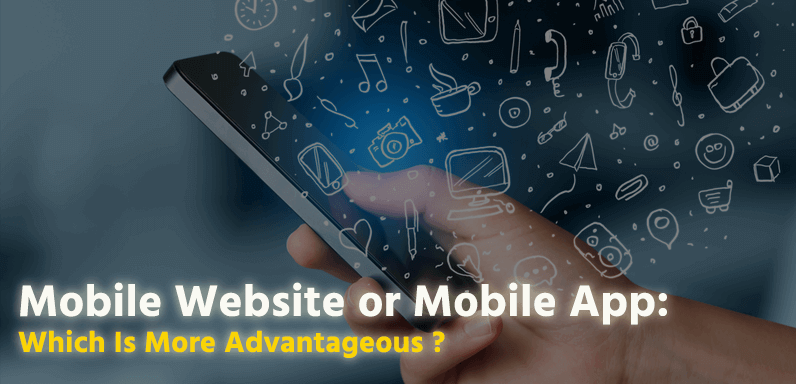
Mobile Website Or Mobile App: Which Is More Advantageous ?
The old version of this question, "mobile website or mobile app," is missing a third option that's become genuinely competitive with both over the last few years. Progressive Web Apps now deliver push notifications, offline functionality, and home-screen installation. These used to require going native. They still run through a browser. Any current answer to this question needs to weigh all three, not just two.
Quick answer: a mobile website is right for informational, content-first businesses that need maximum reach with minimum cost. A native app is right when you need deep hardware access, app store presence, or the highest possible performance. A PWA is increasingly the right default in between, for e-commerce, booking systems, dashboards, and most B2B tools, delivering close to native-level engagement at a fraction of native's cost.
What each option is
A mobile website is a standard website, browser-based HTML pages, optimized to display well on a phone screen. No installation, no app store, accessed by typing a URL or following a link.
A native app is built specifically for one platform, using Swift for iOS or Kotlin for Android, distributed through the App Store or Google Play, and installed directly onto the device. It can access the phone's hardware directly and, once installed, can work fully or partially offline.
A Progressive Web App (PWA) is a website built with modern web technology that behaves like an app. It's installable to the home screen. It works offline through something called a service worker. It can send push notifications, and it loads near-instantly through intelligent caching. It's the same underlying technology as a website, HTML, CSS, JavaScript, engineered to close most of the experience gap with native apps.
Where mobile websites genuinely win
Reach and accessibility. A website works on any device with a browser, no install step, no app store approval, no platform-specific build. Anyone with a link can access it immediately.
Cost and speed to launch. A mobile website remains the cheapest, fastest option to get a mobile presence live, particularly for a business that's primarily informational, a restaurant's menu and hours, a service business's contact details and portfolio.
Search visibility. A website is fully crawlable and indexable by search engines by default, which matters enormously for a business depending on organic discovery. Native app content generally isn't indexed by traditional search the same way at all.
Instant updates. Change the content, and every visitor sees the new version immediately, no app store review process, no waiting for users to download an update. Getting this part of a site actually right, not just technically live but genuinely well designed for how mobile visitors actually browse, is worth pairing with real attention to effective website design rather than treating mobile responsiveness as an afterthought.
Where native apps genuinely win
Deep device access. Advanced camera features, Bluetooth, precise background GPS, biometric authentication, native apps can reach hardware capabilities a browser simply can't, at least not to the same depth.
Offline-first performance. While PWAs now handle offline functionality well for content and simple interactions, a native app still has the edge for complex, data-heavy offline work.
App store presence and discovery. For products where users actively search app stores looking for a solution, being present there, with reviews, ratings, and category rankings, is a real discovery channel a website or PWA doesn't have.
The highest-performance use cases. Mobile gaming, intensive graphics, and any experience demanding the absolute peak of device performance still generally favor native development.
Emerging on-device AI. Native apps currently have the advantage for AI features requiring persistent access to sensors, health data, or background behavioral signals, and for agentic systems that need to take actions on a user's behalf at the operating-system level. PWAs can tap cloud-based AI and even run lightweight models on-device, but the deepest AI integrations still lean native for now.
Progressive Web Apps: the option most comparisons still skip
This deserves real weight because the results companies have reported after switching are substantial, not marginal. Twitter's Lite PWA cut data usage by 70 percent and increased pages per session by 65 percent. Pinterest saw a 60 percent increase in core engagement and a 44 percent increase in ad revenue after rebuilding as a PWA. Starbucks doubled its daily active users. Flipkart, India's largest e-commerce platform, reported a 70 percent increase in conversions. AliExpress saw a 104 percent jump in conversion rates for new users after launch, alongside a 74 percent increase in average session time.
The cost case is just as real. A PWA typically costs 40 to 70 percent less to build than equivalent native apps for both platforms, since it's one codebase rather than two separate native builds. With an offshore or India-based team, a focused PWA MVP typically runs $15,000 to $40,000, and a full-featured PWA typically runs $40,000 to $90,000. Native development covering both iOS and Android, built the same way, typically runs $50,000 to $150,000, and can exceed $250,000 for complex products needing specialized functionality or a larger team. Costs move considerably higher, often two to three times these figures, when built through a US or Western European agency rather than an offshore team, since the underlying hourly rates differ that much.
One real limitation worth knowing directly: Apple removed standalone PWA support specifically in the EU in response to Digital Markets Act compliance requirements. This has fragmented the PWA experience on iOS depending on region, and it's worth factoring into a PWA decision if the EU is a meaningful part of your market.
There's also a search visibility advantage specific to PWAs. Every screen in a PWA has a real URL, is crawlable by search engines, and supports the same meta tags and structured data as a standard website. That extends to AI-driven search now too. PWA content can be surfaced and cited by AI-powered search platforms the same way a website's content can, while native app content generally can't be reached or cited the same way at all. For a business where organic and AI-search visibility matters, that's a real, structural advantage PWAs have that native apps simply don't.
Where PWAs and hybrid apps fit together
Worth clarifying a related distinction, since the terms get confused often. A PWA runs entirely in the browser, even when installed to a home screen, no app store distribution required. A hybrid app wraps similar web technology inside a native shell using a tool like Capacitor. This gives it real app store presence and deeper native plugin access than a pure PWA can reach. It still shares most of a PWA's cost and development speed advantages over fully native code. For a business that wants app store visibility specifically, alongside PWA-style development economics, a hybrid build is often the more direct answer than either a pure PWA or a fully native app.
A worked example
Take a restaurant chain deciding how to handle mobile. If the goal is just showing hours, location, and a menu, a well-built mobile website handles that completely, no reason to spend more. But once the business wants repeat customers ordering directly, tracking loyalty points, and getting notified about a same-day deal, the calculation changes. That's closer to the territory covered in our piece on building loyalty and discount features into a restaurant app. It's exactly the kind of repeated-engagement use case where a PWA usually earns its cost over a plain website. It doesn't necessarily require the expense of a fully native build, unless the chain specifically wants app store presence as part of its brand strategy.
The same logic extends to almost any business weighing this decision: name the specific behavior you need from users, not the platform you assume you need, and the right technical choice tends to follow naturally from that.
What determines the right choice
Is your product primarily informational or primarily transactional? A business mainly sharing information, hours, services, portfolio, contact details, is usually well served by a strong mobile website alone. A business built around repeated transactions, bookings, purchases, account management, benefits from the deeper engagement a PWA or native app enables.
How often do you need users to come back? High-frequency use cases, daily check-ins, ongoing engagement, benefit from push notifications and home-screen presence, which rules out a plain website and points toward a PWA or native app.
Does your product need deep hardware access or hit the absolute performance ceiling? If yes, specifically and concretely, not just "it would be nice," native remains the right technical choice. If the honest answer is no, a PWA delivers most of the same engagement benefits at a meaningfully lower cost.
How much does search and AI-search discovery matter to your growth strategy? If a meaningful share of your users need to find you through search rather than already knowing your brand, that's a real factor. A website or PWA keeps that discovery channel open in a way a native-only app doesn't.
What's your actual budget and timeline? A native build covering both platforms is the most expensive, slowest path to launch. A PWA delivers close to that experience for a fraction of the cost and time. A website is fastest and cheapest of all, appropriate when the deeper engagement features simply aren't necessary for the business.
A quick way to sanity-check your instinct
If you're still torn, try this: write down the single feature you're most worried about losing by not going native. If it's push notifications, offline access, or home-screen presence, a PWA covers all three, so that worry doesn't actually rule out the cheaper option. If it's genuine hardware access, precise background location, advanced camera control, biometric checks tied to secure device storage, that's a real, specific reason to lean native. Most founders default to assuming they need native because it sounds more serious, without ever naming the specific capability that actually requires it. Naming it explicitly usually resolves the decision faster than any general comparison can.
The bottom line
The old "website or app" framing missed the option that's become the practical default for a large share of businesses in between those two extremes. Progressive Web Apps now deliver real, measured engagement and conversion gains. Companies like Pinterest, Twitter, Flipkart, and Starbucks have the results to show for it. They got those results at a fraction of native development's cost. A growing set of genuinely native-only use cases still exist too, deep hardware access, top-tier gaming performance, agentic AI at the OS level. Those still justify going fully native.
Getting this decision right from the start, matched honestly to your actual business model and users rather than a default assumption, is exactly the conversation worth having with an experienced mobile app development partner. A good one should be equally comfortable recommending a website, a PWA, or a native build, depending on what your specific product actually needs.
Frequently Asked Questions
Is a Progressive Web App as good as a native app? For most business use cases, e-commerce, booking systems, dashboards, content platforms, PWAs now deliver close to native-level engagement, with companies reporting substantial gains in engagement and conversion after switching. Native still holds a real advantage for deep hardware access, top-tier gaming performance, and the most advanced on-device AI features.
How much does a PWA cost compared to a native app? With an offshore or India-based team, a focused PWA MVP typically runs $15,000 to $40,000, and a full-featured PWA runs $40,000 to $90,000. Native development covering both iOS and Android, built the same way, typically runs $50,000 to $150,000, and can exceed $250,000 for complex products. Costs run two to three times higher through a US or Western European agency, given the difference in underlying hourly rates.
Can a Progressive Web App send push notifications and work offline? Yes. Through a service worker, a PWA can send push notifications, cache content for offline access, and sync data in the background. These are capabilities that used to require a native app. One real limitation: Apple removed standalone PWA support specifically in the EU due to Digital Markets Act compliance requirements, which affects the experience in that region on iOS.
Should a small business build a website, a PWA, or a native app first? Most small businesses that are primarily informational, sharing hours, services, and contact details, are well served by a strong mobile website alone. Once repeated engagement, bookings, or transactions become central to the business, a PWA is usually the more cost-effective next step before committing to full native development.
Do search engines and AI search tools index Progressive Web Apps? Yes. Every PWA screen has a real URL and is crawlable the same way a standard website is, including by AI-powered search platforms that can cite PWA content directly. Native app content generally isn't reachable or citable by search and AI search tools the same way, which matters for any business relying on organic discovery.
What's the difference between a PWA and a hybrid app? A PWA runs entirely in the browser, even when installed to a home screen, with no app store distribution needed. A hybrid app wraps similar web technology inside a native shell, giving it real app store presence and deeper native plugin access while still sharing most of a PWA's cost advantages over a fully native build.
What can native apps do that Progressive Web Apps still can't? Deep, persistent access to device hardware, advanced camera control, Bluetooth, precise background location, and biometric authentication, remains stronger on native. The same is true for the most demanding graphics and gaming performance, and for emerging agentic AI features that need to take actions at the operating-system level rather than within a browser sandbox.



 Whatsapp
 Email